
Seen In: The Talent 100
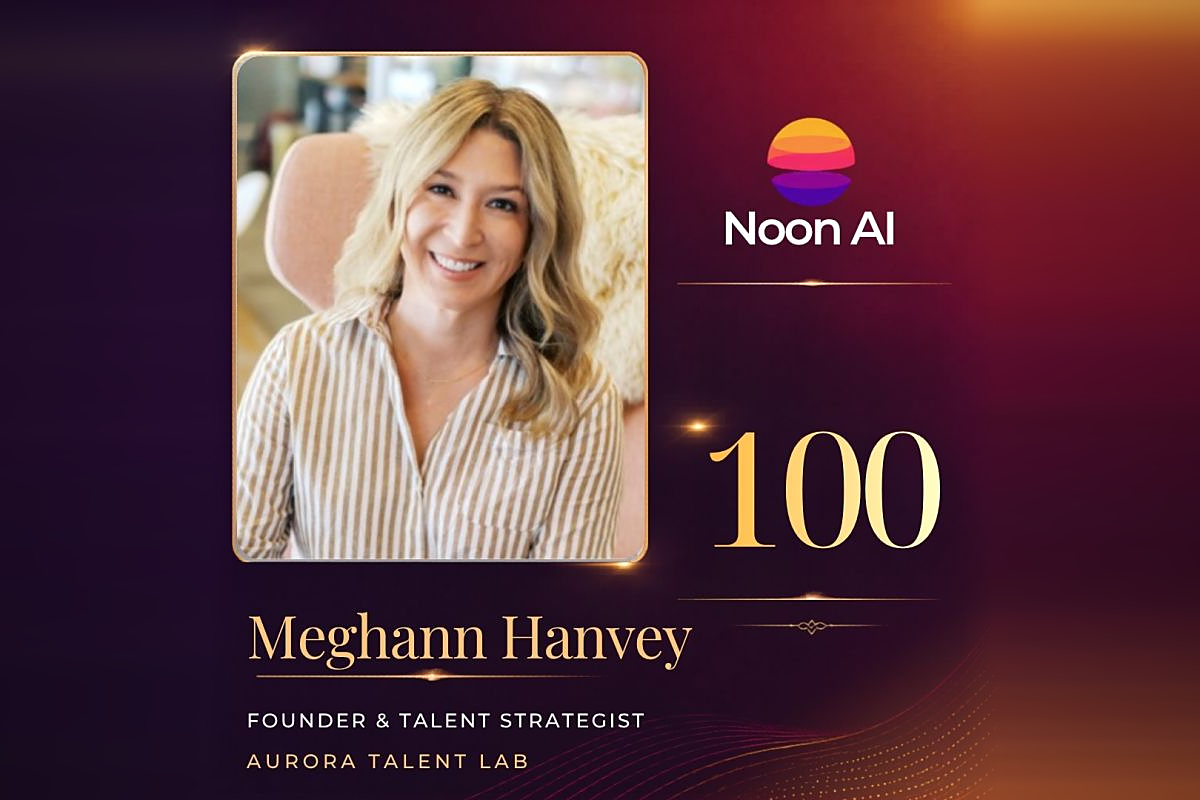
“That big picture view is just so crucial to getting out of that transactional recruiting and going into strategic recruiting.”
Meghann Hanvey has built her career around companies at a particular stage of growth: small enough that the systems are still being built, but growing fast enough that those systems need to scale quickly.
From Sprinklr and Clari to Classy.org, she has repeatedly joined organizations with fewer than 100 employees and stayed through periods of significant expansion. Today, through Aurora Talent Lab, she works with clients on how they hire, bringing the perspective of someone who has spent much of her career in build mode.
From the Admin Desk to Build Mode
Hanvey entered the workforce in 2009 and took an HR assistant role at a small biotech company in San Diego. The work was largely administrative, but sitting directly across from hermanager gave her an early education in how to communicate with executives, adapt to different audiences, and operate professionally.
As the company grew, Hanvey began helping with recruiting coordination. When recruiting became a separate function, her manager encouraged her to make the move, recognizing that talent acquisition was where her interests and strengths were emerging.
That transition helped Hanvey discover the environment where she thrives. She began deliberately choosing growth-stage companies, often joining while the organization was still small and helping it navigate the challenges that come with scaling toward thousands of employees.
Two Questions for Every AI Tool
Hanvey initially approached AI with uncertainty. Instead of immediately embracing or rejecting it, she studied the technology and developed two questions that now guide her adoption of new tools: does this make me more efficient, and does this make me more mindful?
If the answer to both is no, she does not use it.
One practical application is job descriptions. Hanvey uses AI to examine how language might be received by candidates with different backgrounds and experiences, including people with disabilities and members of minority groups. Her goal is to create a more equitable candidate experience and identify perspectives she may not naturally see herself.
She also uses AI to improve reporting and challenge recruiting processes that have become habitual. Rather than accepting that an interview question or process should remain unchanged because it has always been done that way, she uses the technology to reconsider what still makes sense as the company evolves.
For Hanvey, AI fluency is not a one-time project. The technology is changing too quickly for that. Staying current requires continuous experimentation and learning.
Give Recruiters the Bigger Picture
Hanvey’s advice to talent leaders centers less on a particular recruiting tactic and more on recruiters understanding of the business.
Too often, she believes, recruiting teams receive roles to fill without enough context about why those hires matter. Without that perspective, the work can become focused on closing requisitions rather than achieving the business outcome behind the hire.
Her solution is greater access. Recruiters can sit in on quarterly business reviews, participate in leadership meetings, or receive meaningful summaries that explain how teams are growing, why that growth matters, and how individual hires connect to broader company goals.
When recruiters understand those connections, Hanvey believes they can approach hiring with greater intention and identify candidates who are better positioned to grow with the organization.
That broader business understanding is what separates transactional recruiting from strategic recruiting. For Hanvey, talent leaders have an important role in making that transition possible by giving their teams the context, access, and perspective to understand how every hire connects to the business.
About the Talent 100
The Talent 100 is an annual recognition spotlighting leaders who are advancing HR and talent acquisition. Honorees are selected through peer nominations and independent selection committees, with selection based entirely on merit and no pay-to-play requirements. The recognition is organized by Noon AI.
